What Is Nurse Call? The Complete Guide to Nurse Call Systems, Standards and Costs
By Nurse Call Technology Editorial Team · 26 September 2026
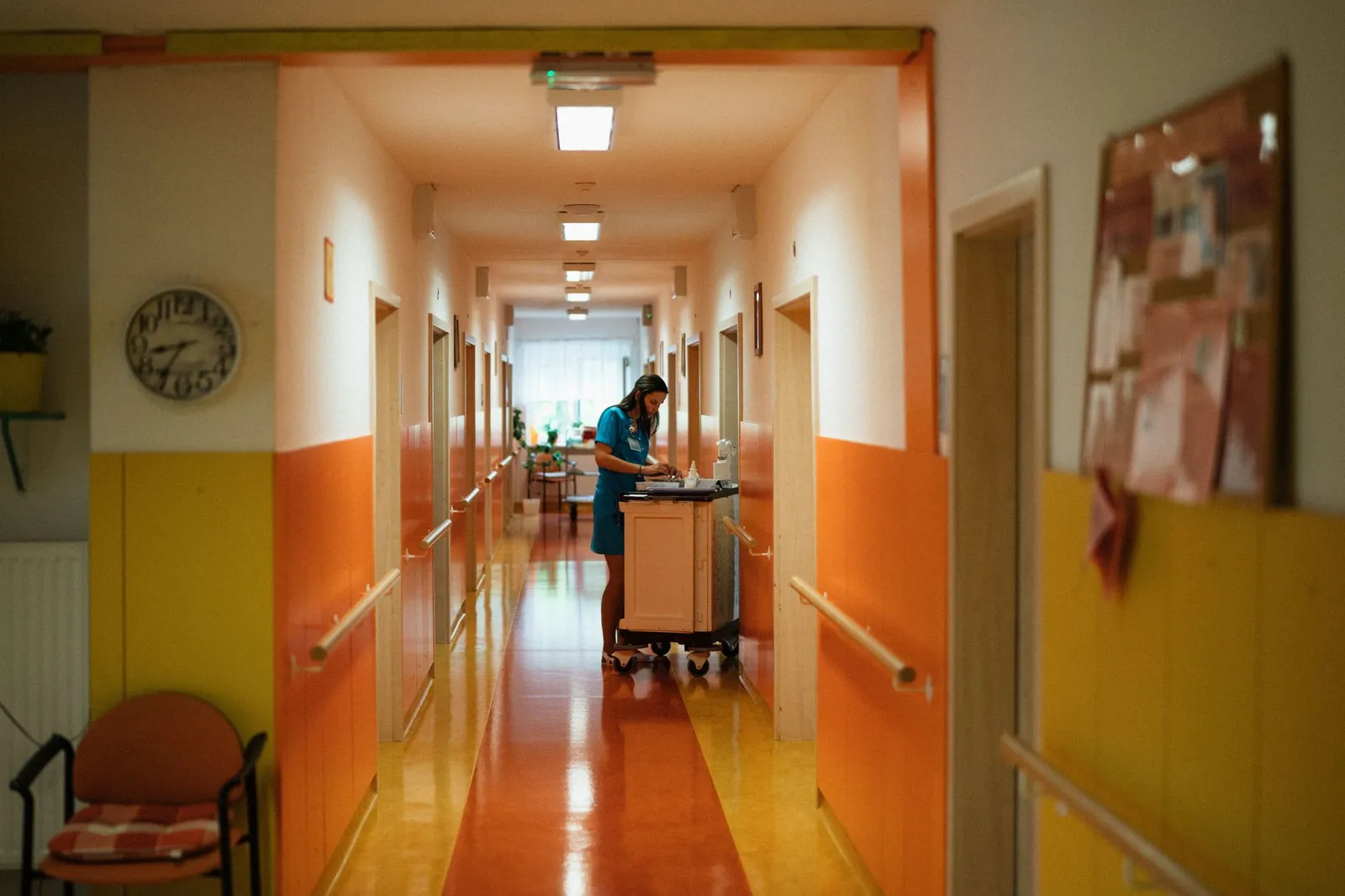
What is nurse call? A complete guide to nurse call systems: how they work, UL 1069 and NFPA 99 standards, wired vs wireless, real cost drivers and a checklist.
What Is Nurse Call? A Complete Guide to Nurse Call Systems, Standards and Costs
A patient presses a button beside a bed at 3:04am. Whether help arrives in 90 seconds or nine minutes is decided by engineering choices made years earlier. This guide answers what is nurse call in precise terms: the equipment, the standards that govern it, the difference between a nurse call system and a telephone nursing helpline, realistic cost drivers, and a specification framework you can use on a live project. Written by the Nurse Call Technology Editorial Team.
On this page- What is nurse call? The direct answer
- Nurse call vs NURSE-ON-CALL: two different things
- What is a nurse call system and how does it work?
- The components: call points, alarms and annunciators
- Wired vs wireless nurse call architectures
- Standards and codes: UL 1069, UL 2560, NFPA 99
- Response time, falls and why nurse call is a safety system
- Nurse call by care setting
- How much does a nurse call system cost?
- The 7-factor nurse call specification framework
- Nine costly mistakes in nurse call projects
- Implementation: from survey to handover
- Testing, maintenance and lifecycle
- FAQ
Key facts
The UL 1069 standard, which governs hospital nurse call equipment, defines a fundamental nurse call system (NCS) as one that provides audible and visual communication between patients and staff in a health care facility and conforms to NFPA 99 and NFPA 70.Source: UL Standards (via ANSI Webstore) (February 8, 2024)8th editionThe 8th edition of UL 1069, the standard covering hospital signaling and nurse call equipment, was published on February 8, 2024. Source: UL Standards (via ANSI Webstore) (February 8, 2024)To demonstrate compliance with NFPA 99, the Health Care Facilities Code, hospitals look for nurse call equipment tested to UL 1069, a performance-based standard ensuring minimum system configurations and proper call routing to the nurse station.Source: UL SolutionsUL maintains a separate standard, UL 2560, specifically for emergency call systems used in assisted living and independent living facilities, distinct from UL 1069 which covers hospital nurse call equipment.Source: UL SolutionsUnder the 2025 California Building Code, a nurse call system in an alternative birthing clinic must be located in the birthing room and must alert the nearest continually staffed administrative center or nurses' station.Source: UpCodes (citing California Building Code 2025) (2025)28 units, 4 hospitalsAn exploratory multi-hospital study analyzing archived data from 28 patient care units across 4 Michigan hospitals between January 2004 and May 2009 found that faster staff call light response time was associated with lower total fall rates. Source: BMC Health Services Research (March 31, 2012)What Is Nurse Call? The Direct Answer
Nurse call is a dedicated communication system that lets a patient or resident summon clinical staff, and lets staff signal each other, inside a healthcare facility. The UL 1069 standard that governs hospital nurse call equipment defines a fundamental nurse call system as one providing audible and visual communication between patients and staff in a health care facility, conforming to NFPA 99 and NFPA 70 (UL 1069 Ed. 8-2024).
That definition contains the three ideas that separate nurse call from an ordinary intercom or doorbell. First, it is bidirectional: the call travels to staff, and in most configurations staff can acknowledge, speak back, or cancel only at the point of origin. Second, it is redundant by design: audible and visual annunciation together mean a call is not lost if a corridor is noisy or a light is out of sight. Third, it is life-safety infrastructure, wired and powered to standards that ordinary low-voltage communications gear never has to meet.
People searching what is nurse call usually arrive with one of three underlying questions: what the physical equipment is, what the software behind it does, or whether "nurse call" refers to a telephone health advice line. This guide answers all three, starting with the distinction that causes the most confusion.
One-sentence summary for quick reference: Nurse call is a code-governed, audible-and-visual signalling system installed in hospitals, aged care homes and clinics that allows patients to summon staff and routes those calls to the right responder at a nurses' station, on a corridor light, or on a mobile device.
Nurse Call vs NURSE-ON-CALL: Two Completely Different Things
Nurse call is building infrastructure; NURSE-ON-CALL is a public telephone health advice line operated in Victoria, Australia. The two share a name fragment and nothing else. One is hardware and software fixed inside a care facility; the other is a phone number a member of the public dials from home to speak to a registered nurse.
What is nurse on call, in one paragraph?
NURSE-ON-CALL is a Victorian Government telephone service that connects callers to a registered nurse for health advice at any hour. It is a triage and advice service, not an emergency service and not a substitute for ambulance dispatch. It is legitimate and government-operated, and it does not install, monitor or respond to the nurse call buttons inside a hospital ward or an aged care room. Details of the service, including its operating arrangements, are published by the Victorian Department of Health.
Why the confusion matters commercially
Facility managers occasionally brief procurement using the wrong term, and vendors receive enquiries for "nurse on call" when the requirement is a bed-head unit refurbishment across 40 rooms. The practical test: if the requirement involves cabling, call points, room lights, annunciators or a nurses' station display, you are procuring a nurse call system. If the requirement is telephone triage staffing, you are procuring a clinical contact-centre service. Everything that follows in this guide concerns the first category.
What Is a Nurse Call System and How Does It Work?
A nurse call system works in five stages: initiation, transmission, annunciation, escalation and cancellation. A patient presses a call point; the signal travels over dedicated cabling or a licensed radio path to a controller; the controller lights a room and corridor indicator and displays the call at a staff station; if unanswered within a set time the call escalates; a staff member cancels it at the point of origin, which is the only place cancellation is permitted in a compliant design.
The "cancel at source" rule is the single most misunderstood aspect of nurse call engineering. It exists so that no call can be cleared remotely by a busy staff member who has not physically attended the patient. If your proposed system permits a call to be dismissed from a desk console without attendance, it is not behaving like nurse call — it is behaving like a paging system.
Call priority levels
Modern nurse call platforms differentiate call types so that staff can triage before they walk. A typical hierarchy, from lowest to highest urgency:
- Service / assistance call — patient requests routine help (water, repositioning, bathroom assistance).
- Attendance call — a staff member in the room summons a colleague for a two-person task.
- Bathroom / ensuite call — escalated automatically because of elevated fall risk in wet areas.
- Emergency call — pull cord or dedicated emergency button, distinct tone and light pattern.
- Cardiac / code blue — highest priority, overrides all lower calls and typically sounds facility-wide within the response zone.
Each priority should have a distinguishable audible tone cadence and a distinguishable visual pattern — colour, flash rate, or both. Staff on night shift rely more on tone cadence than colour, which is why tone differentiation is not a cosmetic setting.
Where calls are displayed
Annunciation typically happens in four places simultaneously: the patient room indicator, the over-door or corridor light, a zone display at a corridor junction, and the staff station console. Systems with mobility integration add a fifth destination — a handset, DECT phone, pager or smartphone application carried by the assigned nurse. Adding mobile delivery does not remove the obligation for fixed audible and visual annunciation; it supplements it.
The Components: Call Points, Alarms, Annunciators and Spares
Every nurse call system is built from six component families: call points, bed-head units, over-door lights, zone annunciators, a central controller, and the cabling or radio infrastructure joining them. Specifying the controller carefully while treating the accessories as an afterthought is the most common source of post-handover dissatisfaction, because the accessories are what patients and staff actually touch.
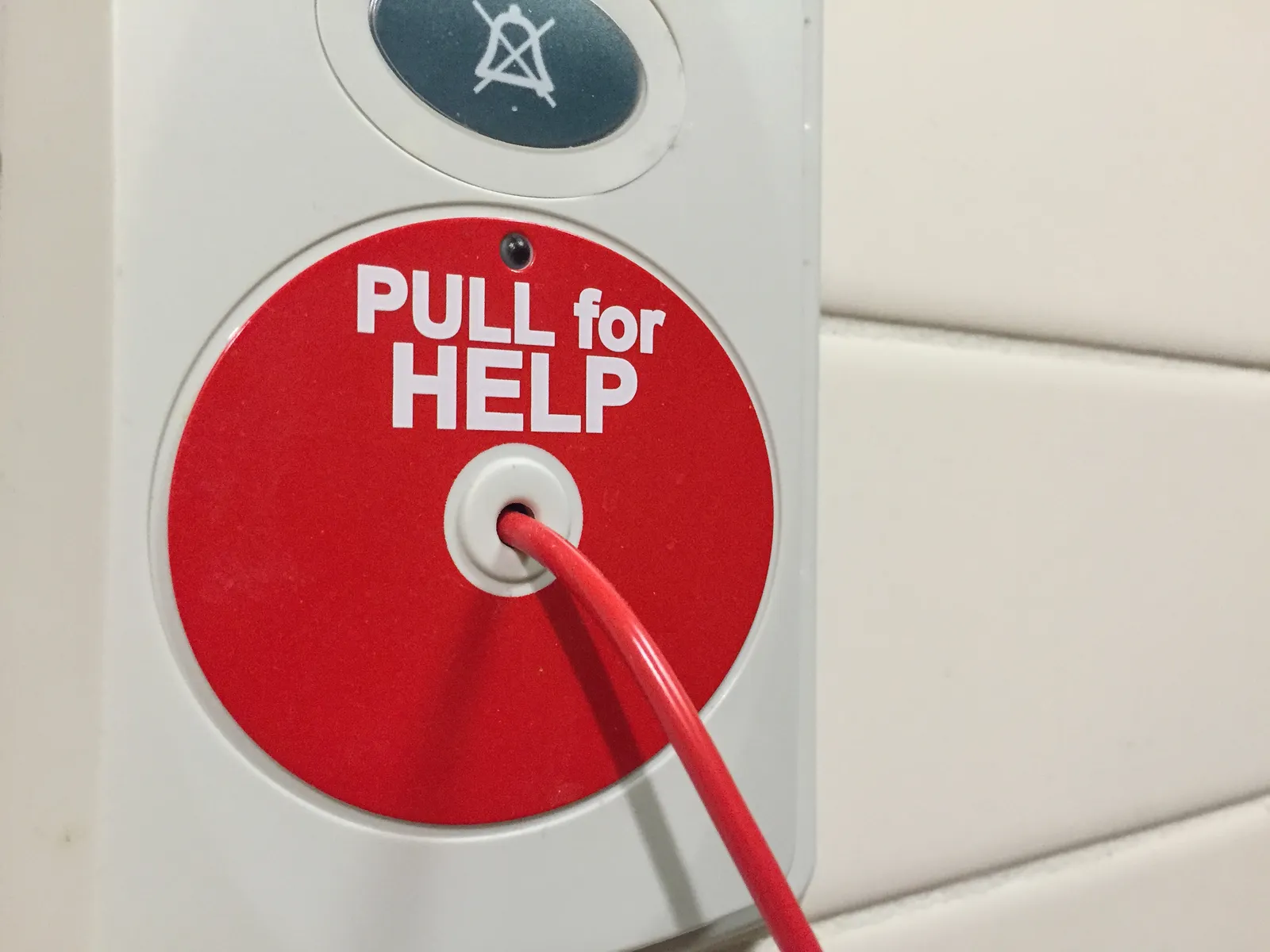
Call point selection should follow patient cohort, not architectural preference. A rehabilitation ward with reduced grip strength needs large-surface pressure pads or pneumatic call switches rather than small tactile buttons. A dementia unit may need concealed or staff-only activation in some zones alongside accessible activation in others. Ensuite areas need pull cords with bangles at two heights — one reachable standing, one reachable from the floor after a fall. Our reference article on call points, alarms, annunciators and spare parts breaks down each device family and the spares holding we recommend per 100 beds.
Component quick-reference table
| Component | Function | Specification trap |
|---|---|---|
| Bed-head unit | Call origin, reassurance light, cancel point, often speech | Mounting height conflicts with medical gas rails |
| Pear-push / handset | Patient-held call trigger | Highest-churn consumable; under-ordered in spares |
| Ensuite pull cord | Emergency call from wet area | Cord tied up out of reach by cleaning staff |
| Over-door light | Visual annunciation at room threshold | Colour scheme not documented for relief staff |
| Zone annunciator | Corridor-level call summary | Sight lines blocked by later fit-out works |
| Controller / server | Routing, escalation, logging, integration | No documented failover or UPS runtime |
| Staff terminal | Console display and acknowledgement | Permits remote cancel — non-compliant behaviour |
Wired vs Wireless Nurse Call Architectures
Wired nurse call suits new builds and acute hospital wards; wireless nurse call suits retrofits, heritage buildings and residential aged care where cabling disruption is unacceptable. The decision is driven by building fabric, occupancy during works, supervision requirements and lifecycle cost — not by a blanket claim that one is superior.
Wired systems provide deterministic signalling paths, power over the same infrastructure, and straightforward supervision of every device. Where a ward is being built from a slab, the marginal cost of dedicated cable containment is small relative to the reliability gained. Our detailed treatment of wired nurse call systems for hospitals and care facilities covers cable classes, containment separation and controller topology.
Wireless systems remove the need to open occupied walls and shorten programme length dramatically in operating facilities. The trade-offs are battery management, RF survey rigour and supervision intervals — a wireless call point that stops reporting must be detected by the system, not by a nurse discovering it during an incident. The engineering considerations for these deployments are set out in our guide to wireless nurse call systems for retrofits and aged care.
Decision matrix
| Condition | Lean wired | Lean wireless |
|---|---|---|
| New build, slab-up | Strong | Rarely |
| Occupied ward, no decant beds | Difficult | Strong |
| Heritage or asbestos-affected fabric | High risk | Strong |
| Frequent room reconfiguration | Costly | Strong |
| Critical care / code blue zones | Strong | Supplementary only |
| Limited maintenance staffing | Strong (no batteries) | Requires battery regime |
Hybrid deployments are common and entirely legitimate: a wired backbone across acute inpatient areas, wireless extension into a converted wing or an independent living block, with both feeding one annunciation and reporting layer.
Standards and Codes That Define Nurse Call
The anchor standard for hospital nurse call equipment is UL 1069, with UL 2560 covering emergency call systems in assisted and independent living, and NFPA 99 setting the facility-code context. Understanding which standard applies to your building type prevents specifying equipment that cannot be signed off.
The 8th edition of UL 1069, covering hospital signaling and nurse call equipment, was published on 8 February 2024 (UL Standards via ANSI Webstore). To demonstrate compliance with NFPA 99, the Health Care Facilities Code, hospitals look for nurse call equipment tested to UL 1069 — a performance-based standard ensuring minimum system configurations and proper call routing to the nurse station (UL Solutions).
Critically, UL maintains a separate standard, UL 2560, specifically for emergency call systems used in assisted living and independent living facilities, distinct from UL 1069 which covers hospital nurse call equipment (UL Solutions). Specifying UL 1069-listed hospital equipment into an independent living block is not automatically wrong, but specifying UL 2560 equipment into an acute hospital ward can fail review.
Building codes prescribe location, not just equipment
Jurisdictional building codes often state exactly where a nurse call device must be and where the call must land. Under the 2025 California Building Code, a nurse call system in an alternative birthing clinic must be located in the birthing room and must alert the nearest continually staffed administrative center or nurses' station (UpCodes, California Building Code 2025). Florida's Hospital Facilities Design Code requires that a nurse call system be provided in intensive care patient care areas of general hospitals, per the specific requirements set out for critical care units (UpCodes, Florida Hospital Facilities Design Code).
The practical lesson: two hospitals of identical clinical function in different jurisdictions can have materially different nurse call obligations. Always read the applicable building code chapter for your occupancy class alongside the product standard, and record the clause references in your design basis document. Local requirements vary by country and state; confirm current obligations with your authority having jurisdiction before tender.
Editorial note: Standards editions change. This section reflects UL 1069 8th edition (published 8 February 2024) and the code citations current at the date of last update above. Verify the edition in force for your project before issuing a specification.
Response Time, Falls, and Why Nurse Call Is a Safety System
Faster call light response is associated with fewer patient falls. An exploratory multi-hospital study analysing archived data from 28 patient care units across four Michigan hospitals between January 2004 and May 2009 found that faster staff call light response time was associated with lower total fall rates (BMC Health Services Research, 31 March 2012).
That finding reframes the procurement conversation. A nurse call system is not judged by how many features appear on a datasheet; it is judged by the distribution of response times it produces in a real ward with real staffing ratios. Two systems with identical hardware can generate very different response distributions depending on escalation rules, assignment logic and whether calls reach a device the nurse is already carrying.
The four metrics worth reporting monthly
- Median response time by call type — medians, not averages, because a handful of outliers distort means badly.
- 90th percentile response time — the tail is where incidents live.
- Escalation rate — proportion of calls that breached the first escalation timer.
- Call volume per bed per shift — rising volume often signals an unmet care need, not a demanding patient.
A nurse call platform that cannot export these four figures without a vendor service request is a reporting liability. Ask for a sample report during evaluation, populated with demonstration data, and confirm the export format.
Nurse Call by Care Setting
The same term — nurse call — describes materially different systems across acute hospitals, residential aged care, day surgery, mental health units and independent living. Priority structures, device selection and code obligations all shift with setting.
Acute hospital wards
Highest complexity: multi-bed bays, code blue integration, staff-present logic, integration with clinical paging and often bed management. Equipment is typically selected against UL 1069 to support NFPA 99 compliance demonstration. Critical care areas frequently carry explicit code requirements, as Florida's Hospital Facilities Design Code illustrates by mandating nurse call in intensive care patient care areas.
Residential aged care
Lower acuity, higher cognitive impairment prevalence, longer corridors and lower night staffing ratios. Pendant and wearable call devices become central, as do fall-detection sensors, door monitoring and wandering alerts feeding the same annunciation layer. Battery supervision discipline matters more here than anywhere else, because residents cannot be relied upon to report a dead pendant.
Independent and assisted living
These settings fall under emergency call system expectations rather than hospital nurse call expectations — UL maintains UL 2560 specifically for emergency call systems in assisted living and independent living facilities. Coverage tends to be apartment-based with pull cords in bathrooms and bedrooms, and calls may route to an on-site concierge or an off-site monitoring centre.
Mental health units
Anti-ligature device design dominates. Pull cords are generally unacceptable; breakaway, flush and tamper-resistant call points are used instead, and staff duress is often as important as patient call. Duress calls require location accuracy, which shifts the design toward infrastructure-based positioning rather than simple zone reporting.
Day surgery and outpatient clinics
Smaller systems, but with heavy emphasis on recovery-bay calls, toilet emergency calls for sedated patients, and staff assistance calls in consult rooms. Code requirements can be surprisingly specific for particular clinic types, as the 2025 California Building Code requirement for nurse call in alternative birthing clinic birthing rooms shows.
How Much Does a Nurse Call System Cost?
Nurse call system cost is driven by bed count, architecture (wired or wireless), device density per bed, integration scope and whether works occur in an occupied building. Published per-bed figures circulating online rarely account for containment, out-of-hours labour or commissioning, so treat any single headline number with caution and price against a device schedule instead.
Rather than quote a figure we cannot substantiate, here is the cost model we use when preparing budget estimates. Build your own estimate by working through each line — it produces a defensible number far faster than chasing a per-bed rule of thumb.
The eight cost lines in a nurse call budget
- Field devices — count every call point, bed-head unit, pull cord, over-door light and pendant. Device count, not bed count, drives hardware cost.
- Head-end — controllers, servers, network switches, UPS and rack space.
- Infrastructure — cable, containment, penetrations and making good. Usually the largest single variable in wired retrofits; near zero in wireless retrofits.
- Labour — day rate versus night/weekend rate. Occupied-ward works frequently require out-of-hours access, which inflates this line substantially.
- Integration — links to DECT, smartphones, paging, access control, fall sensors or clinical systems. Priced per interface, not per bed.
- Commissioning and witness testing — every device tested, documented and signed off with the authority having jurisdiction where required.
- Training — clinical super-users, night shift coverage, and refresher sessions at 30 and 90 days.
- Lifecycle — annual maintenance, spares holding, battery replacement programme and software support for the asset's expected service life.
Two facilities with identical bed counts can differ by a large multiple on total cost purely on lines 3 and 4. A 60-bed new-build wing with open ceilings and daytime access is a fundamentally different commercial proposition to a 60-bed occupied aged care home with plastered solid walls and night-only working windows. For a scoped estimate against your own device schedule, you can talk to the Nurse Call Technology team about project costs.
The 7-Factor Nurse Call Specification Framework
Score any proposed nurse call system against seven factors before committing: compliance, coverage, routing intelligence, resilience, reporting, serviceability and clinical usability. Weight each factor for your setting, score each option 1–5, and you will surface the weak dimension that a feature-by-feature comparison hides.
| Factor | Question to ask | Evidence to demand |
|---|---|---|
| 1. Compliance | Which standard is the equipment listed to, and which edition? | Listing certificate, edition number, applicable code clauses |
| 2. Coverage | Can a patient reach a call device from the floor in every space? | Marked-up floor plans, not a device count |
| 3. Routing | How are calls assigned, escalated and reassigned at shift change? | Written escalation matrix per ward |
| 4. Resilience | What happens on mains failure, network failure, controller failure? | Documented failure modes and UPS runtime |
| 5. Reporting | Can staff export response time percentiles unaided? | Live demo export, sample CSV |
| 6. Serviceability | Are spares available and can local staff swap a device? | Spares list, lead times, field-replaceable parts |
| 7. Usability | Can a relief nurse operate it without training? | Untrained-user walkthrough during evaluation |
In our experience the factor that most often collapses after go-live is number seven. Systems are demonstrated to project teams and clinical leads, then operated by agency staff at 2am who have never seen the console. Include an untrained-operator test in evaluation: hand the console to someone who has had no briefing and ask them to identify the highest-priority active call within ten seconds.
Nine Costly Mistakes in Nurse Call Projects
Most nurse call disappointments trace to design and governance decisions, not product defects. The list below reflects recurring patterns observed across hospital and aged care deployments.
- Counting beds instead of spaces. Ensuites, day rooms, treatment rooms, therapy areas and corridors all need call coverage. Bed-count-driven schedules under-provision by a wide margin.
- No escalation matrix. Buying escalation capability without writing ward-specific escalation rules means every call escalates identically, and alarm fatigue follows within weeks.
- Allowing remote cancel. Configuring consoles to clear calls from the desk destroys the integrity of response-time data and of the care model itself.
- Ignoring shift-change reassignment. If assignment lists are not updated at handover, calls route to staff who have gone home.
- Undersized spares holding. Pear-push handsets and pendant batteries are consumables. A facility without local stock runs on broken devices between service visits.
- No RF survey on wireless retrofits. Foil-backed plasterboard, lift shafts, commercial kitchens and lead-lined imaging rooms all affect coverage. Surveying after installation is an expensive way to discover this.
- Training the project team, not the night shift. Go-live training scheduled in business hours leaves the highest-risk shift untrained.
- Treating integration as free. Each interface to paging, DECT, smartphones or sensors has configuration, testing and ongoing support cost.
- Not baselining response times before change. Without pre-project data there is no way to demonstrate the new system improved anything.
Implementation: From Survey to Handover
A well-run nurse call deployment moves through eight stages: needs analysis, code review, site survey, design, staged installation, commissioning, training and post-go-live review. Compressing stages two and three is where programmes fail.
- Needs analysis (weeks 1–2). Interview charge nurses on each ward. Capture current pain points, call volumes and known dead spots. Baseline existing response times if any data exists.
- Code and standards review (weeks 2–3). Identify the occupancy classification, applicable building code chapter and product listing requirement. Record clause references in the design basis.
- Site survey (weeks 3–4). Physical walkthrough of every space. For wireless, an RF survey with test transmitters in the worst-case locations — bathrooms, back corners, basements.
- Design and device schedule (weeks 4–6). Marked-up plans showing every device, every annunciator sight line, containment routes and head-end location. This document is what you price.
- Staged installation. Ward by ward, with the legacy system live until the replacement zone is proven. Never run a facility-wide cutover in a single night.
- Commissioning. Test every device individually, record the result, and witness-test a sample with the clinical lead present. Test failure modes deliberately: pull mains, pull the network cable, remove a battery.
- Training. Super-users first, then all-shift sessions including nights and weekends, then quick-reference cards at every console.
- 30/90-day review. Pull response-time reports, compare against baseline, retune escalation timers. Almost every system needs timer adjustment after real-world exposure.
Free asset — the 12-point handover checklist. Before you accept a nurse call system: (1) every device tested and logged; (2) escalation matrix signed by clinical lead; (3) remote cancel disabled; (4) failure modes demonstrated; (5) UPS runtime measured; (6) as-built drawings issued; (7) spares delivered and stored; (8) battery replacement schedule documented; (9) reporting export demonstrated; (10) all shifts trained with attendance recorded; (11) fault-reporting route published at every station; (12) 30-day review date booked in writing.
Testing, Maintenance and Lifecycle
Nurse call is a life-safety system and should be tested on a documented cycle, not reactively. A workable regime combines daily visual checks by ward staff, monthly functional sampling, and an annual full-system test with written certification.
Daily checks cost almost nothing: confirm every reassurance light is illuminated at bed-head units, confirm pull cords hang to floor level, confirm consoles show no standing faults. These three checks catch the majority of real-world failures — a cord tied up after cleaning, a handset unplugged behind a bed, a device offline since the previous shift.
Monthly functional testing should sample every device type in every zone and confirm the call reaches all annunciation destinations, including any mobile devices. Annual testing should cover every device without exception, plus deliberate failure simulation: mains loss, controller failover, network interruption and battery depletion on wireless endpoints. Record results against device IDs so that trends — repeated faults in one wing, for example — become visible.
Lifecycle planning is the neglected part. Field devices in high-contact areas wear faster than head-end equipment, so plan a rolling replacement of call points and handsets rather than a single end-of-life replacement of the whole system. Maintaining a spares holding sized to your device population, as set out in our accessories and spares guidance, keeps a ward operational between service visits instead of running on taped-up handsets.
Nurse Call FAQ
What is nurse call in simple terms?
Nurse call is the system of buttons, cords, lights, displays and software that lets a patient or resident summon staff inside a healthcare facility and ensures that call is seen and heard by the right person. UL 1069 defines a fundamental nurse call system as one providing audible and visual communication between patients and staff in a health care facility.
In practice it spans a single pull cord in a small clinic through to a facility-wide platform with escalation rules, mobile delivery and response-time reporting.
Does a nurse-on-call service cost money?
NURSE-ON-CALL in Victoria is a government-funded telephone helpline that connects callers to a registered nurse, and it is described by the Victorian Department of Health as a free service — standard call charges from your own carrier may still apply. This is entirely separate from nurse call systems installed inside hospitals and aged care homes, which are capital equipment purchased by the facility.
Is nurse-on-call legitimate?
Yes — NURSE-ON-CALL is an official Victorian Government health advice line staffed by registered nurses, published on Victorian Department of Health channels. It provides advice and triage, not emergency response; in an emergency, contact emergency services directly. It has no operational connection to the nurse call equipment installed in a care facility.
How much does a nurse call system cost?
There is no reliable universal per-bed price, because cost is dominated by device count, cabling and containment, out-of-hours labour in occupied buildings, and integration scope rather than bed numbers alone. Price against a marked-up device schedule covering all eight budget lines — field devices, head-end, infrastructure, labour, integration, commissioning, training and lifecycle support.
A wireless retrofit in an occupied aged care home and a wired installation in a new-build wing of the same bed count can differ substantially, mainly on infrastructure and labour lines.
What standard applies to nurse call equipment?
UL 1069 is the standard covering hospital signaling and nurse call equipment, with its 8th edition published on 8 February 2024. UL Solutions notes that hospitals look for equipment tested to UL 1069 to demonstrate compliance with NFPA 99, the Health Care Facilities Code. A separate standard, UL 2560, applies to emergency call systems in assisted living and independent living facilities.
Does nurse call affect patient safety outcomes?
Evidence links faster call response to fewer falls. An exploratory study using archived data from 28 patient care units across four US hospitals between January 2004 and May 2009 found that faster staff call light response time was associated with lower total fall rates, published in BMC Health Services Research on 31 March 2012. That is an association from observational data rather than proof of causation, but it supports treating response time as a managed clinical metric.
Can wireless nurse call be used in a hospital?
Wireless nurse call can be used in hospitals, most commonly for retrofits, extensions and non-acute areas, provided the equipment meets the applicable listing requirement and the system supervises every endpoint. For critical care and code blue zones, wired infrastructure remains the typical primary architecture, with wireless used as a supplementary layer rather than a replacement.
Where must nurse call devices be installed?
Device locations are prescribed by the applicable building code for your occupancy class. Under the 2025 California Building Code, an alternative birthing clinic must have nurse call located in the birthing room, alerting the nearest continually staffed administrative center or nurses' station. Florida's Hospital Facilities Design Code requires nurse call in intensive care patient care areas of general hospitals. Always confirm the code edition in force with your authority having jurisdiction.
Next Steps
If you came to this page asking what is nurse call and now need to act, work in this order: confirm your occupancy class and applicable code clauses, produce a device schedule from marked-up plans rather than a bed count, decide wired versus wireless against the decision matrix above, and score shortlisted options with the 7-factor framework. Only then request pricing — a quote against a vague scope is not comparable to a quote against a schedule.
This guide is maintained by the Nurse Call Technology Editorial Team and reviewed as standards editions and code cycles change. Standards, code requirements and pricing conditions vary by jurisdiction and over time; verify current obligations with the authority having jurisdiction for your project before issuing a specification or purchase order.